“I am the Ancient, I am The Land. My beginnings are lost in the darkness of the past. "
The Pitch
Andaluria is a land of sweeping vineyards where beauty and dread intertwine. By day, the streets and valleys are alive with festivals, music, and the scent of wine—but when the sun sets, monsters come out to feast. For generations, the old superstitions and folk rites kept the beasts at bay, but of late the nights have grown unnaturally long, and the citizens of Andaluria live in fear of increasingly terrifying monsters.
In a Dark Heart of Andaluria campaign, you’ll play monster hunters who must investigate horrific crimes, navigate political strife, and slay supernatural creatures to protect the people from eternal darkness.
Tone
Gothic, Grim, Heroic, Intriguing, Monstrous, Mysterious, Romanticism, Spooky, Thrilling
Theme
Battle Not with Monsters Lest Ye Become One, Dangerous Secrets, Driving Back the Darkness, Faith & Tradition, The Nature of Evil, Power & Politics
Touchstones
Castlevania, Curse of Strahd, John Constantine: Hellblazer, Monster of the Week, Slayers, Supernatural, Vaesen, Vampire Hunter D, Van Helsing, The Witcher, World of Darkness, Andalucía region of Spain
The Overview
A land of sirocco winds, volcanic soil, and simmering intrigue, Andaluria is a region forged by rebellion. One hundred years ago, its people rose up against the tyrannical Emperor Arcedrio (he/him) and cast off the yoke of imperial control. Today, Andaluria appears to thrive due to its lush vineyards, its lucrative harbor trade, and the canny administration of its Council of Five. Yet beneath the surface, ancient rituals, secret bargains, and monstrous hungers still shape the fate of its people.
Andaluria’s landscape, like its history, was sculpted by shadow and flame. The Serracorte, a jagged chain of dormant volcanoes, dominates the north—their obsidian slopes, ideal for growing grapes, rise into scrubland and thin pasture where hardy shepherds and wild creatures make their homes. These mountains shelter Andaluria from the harsher climates beyond, giving the region its bright, blazing days and dark, sultry nights. The Valmorria River flows from the mountain peaks through fertile valleys tangled with grapevines before emptying into a deep southern bay where the capital city of Jesaña commands the coast, and locals celebrate the long, hot summers with music, dancing, and drink.
But the valleys and vineyards of Andaluria also bear more sinister fruit: since time immemorial, bloodthirsty beast—ghosts, ghouls, and creatures that defy description—have emerged from the shadows to feast on the people’s fear. For generations, Andalurians defended themselves from these creatures with the twin weapons of faith and folklore: the sacred rites of the Church of the Golden Eminence and the practical magic of the nomadic Caio people. These rituals and
wards — holy symbols in the shape of the sun, charms of ash and bone, and offerings to unseen spirits — were once all the protection people needed. Of late, however, these rites and
relics have lost their bite.
For a century, Andaluria has celebrated its independence with festivals of wine and fire, culminating on the summer solstice. But this year, the nights have grown mysteriously longe — and more dangerous—with each sunset. Now, the moon lingers overhead unnaturally, monsters prowl the fields where revelers once danced, and the wealthy elite hide from the horror in masquerades at the hilltop castillo of the mysterious Condesa Ysabela Delamoña IV (she/her). The locals whisper
that death has come to Andaluria, and they fear that, at this year’s Midsummer Festival, the streets of Jesaña will run red with more than wine. What was once joyous is no desperate—celebration turned into apprehension, laughter masking dread, and every shadow hiding fangs.
In this climate of fear, the polemical Archbishop Veyra (he/him) has risen to power by preaching a new church orthodoxy, one uncorrupted by “Caio heresy.” As the people’s faith in the old ways falters, Veyra’s fiery sermons find purchase and threaten to inaugurate a new age of zealotry.
But not everyone has responded to the night’s encroachment with trepidation and obedience: many brave Andalurians have taken up the mantle of “monster hunter,” defending their villages with blade, flame, and forbidden lore when amulets and incantations aren’t enough. Across the countryside, clandestine cells of the Sombral Spade, a secret order of monster slayers led by the enigmatic Julio Cantafierro (he/him), have arisen to face down the dark. To the people, these hunters are heroes. To the church, they are heretics. To those in power, they are a dangerous necessity.
You are a band of monster hunters, brought together to battle the night. Can you defeat the darkness, or will you become what you wish to destroy?
Inciting Incident
The wine festival in the vineyard village of Santavio has always been a night of drink, music, and revelry. This year, however, the joy turned to horror: When the first casks of Condesa Delamoña’s prized red were tapped, an acridn stench rose up, and foul creatures burst from the barrels. Twisted things of vine and claw, dripping with bloodied pulp, descended upon the celebration. Panic surged as the monsters dragged villagers screaming into the vineyards.
The Council of Five has dispatched the Nightwatch, led by Andrea Nocta, to “restore order,” but their mission is clear: protect the remaining casks of wine, not the people. Nocta’s forces are not equipped with the knowledge or experience to hunt the monsters terrorizing Santavio, and if these creatures return, they could threaten villagers and vintage alike.
As the citizens blockade themselves inside the quaint inns and cottages of Santavio, a story starts to spread: This is the curse of the Condesa filtering down to the people who work her land. They say her grapes are secretly fed with the blood of the innocent, and their tortured souls have transformed the vines into coagulated vessels of retribution. Meanwhile, Archbishop Mateo Veyra claims that Caio heretics are responsible for invoking these evil creatures and beckons the terrorized locals into the nearby church for protection.
The leader of the Sombral Spade, Julio Cantafierro, has requested the party’s aid in tracking down the creatures responsible for the attacks tonight, recovering anyone they find alive, and destroying the source of the vineyard’s corruption to prevent another tragedy like this from happening again.
What is the party’s relationship to Cantafierro and the other members of the Sombral Spade? Is it money, honor, or something else entirely that compels the party to take up the hunt? Will the party prioritize the lives of the villagers taken or the people left behind? Based on the stories from witnesses to the attack, what about the monsters terrifies the party most? What evidence did the creatures leave behind, and how does it put the party on their quarry’s trail?
Player Buy-in
Be The Hero
Ultimately, it’s up to you to protect the innocent and defeat evil. While there are others who share your mission, they have their own mysteries to solve and monsters to defeat. You can’t rely on them to do the work, so get your hands dirty.
Confront Darkness in Whatever Form It Takes
Evil often arises in the form of vicious, supernatural creatures stalking the shadows, but it also manifests in the hearts of people corrupted by hate, greed, or desire. Hunt down darkness of every kind, mortal and monster alike.
Embrace the Unknown
Your greatest weapons in this battle will often be ancient legends, strange superstitions, dark omens, and esoteric rituals. Seek out odd truths and dare to walk into places others fear to tread—you never know what you’ll find in the dark.
Be Proactive
Once your party picks up a case, it’s up to you to pound the pavement, dig up dirt, and run down leads. If you ever get stuck, think of all the ways you can find information: searching for evidence, interviewing witnesses, gathering rumors, using magic rituals, running experiments, or seeking out experts. Don’t wait for the action to come to you; chase it down.
Put Your Heads Together
A successful hunt requires your party to acquire scattered bits of information and then piece it together to learn what you’re up against, where to find it, and how to defeat it. Once you’ve gathered several clues, regroup and compare notes. Conjecture, guess, and think outside the box. Brainstorm how the clues you’ve uncovered might fit together, then figure out how to test your theory.
Character Build
We will be building your character in Session 0 after we decide we discuss everyone’s expectations.
Core rulebook, Hope & Fear and Void content are acceptable. Know that Void content may be changed to the official content when it released.
Do not marry yourself to only 1 concept. Make 2-3 concepts just in case one of your ideas does not jive with the story or with other player characters.
Use this primer as a guide to help you design your character concepts.
Your Backstory
We will be exploring “What makes a monster” in this campaign. Build your character as a beginner adventurer but one with something worth taking, or worth protecting.

The Lore
Overview
A land of sirocco winds, volcanic soil, and simmering intrigue, Andaluria is a region forged by rebellion. One hundred years ago, its people rose up against the tyrannical Emperor Arcedrio (he/him) and cast off the yoke of imperial control. Today, Andaluria appears to thrive due to its lush vineyards, its lucrative harbor trade, and the canny administration of its Council of Five. Yet beneath the surface, ancient rituals, secret bargains, and monstrous hungers still shape the fate of its people.
Andaluria’s landscape, like its history, was sculpted by shadow and flame. The Serracorte, a jagged chain of dormant volcanoes, dominates the north—their obsidian slopes, ideal for growing grapes, rise into scrubland and thin pasture where hardy shepherds and wild creatures make their homes. These mountains shelter Andaluria from the harsher climates beyond, giving the region its bright, blazing days and dark, sultry nights. The Valmorria River flows from the mountain peaks through fertile valleys tangled with grapevines before emptying into a deep southern bay where the capital city of Jesaña commands the coast, and locals celebrate the long, hot summers with music, dancing, and drink.
But the valleys and vineyards of Andaluria also bear more sinister fruit: since time immemorial, bloodthirsty beast—ghosts, ghouls, and creatures that defy description—have emerged from the shadows to feast on the people’s fear. For generations, Andalurians defended themselves from these creatures with the twin weapons of faith and folklore: the sacred rites of the Church of the Golden Eminence and the practical magic of the nomadic Caio people. These rituals and
wards — holy symbols in the shape of the sun, charms of ash and bone, and offerings to unseen spirits — were once all the protection people needed. Of late, however, these rites and
relics have lost their bite.
For a century, Andaluria has celebrated its independence with festivals of wine and fire, culminating on the summer solstice. But this year, the nights have grown mysteriously longe — and more dangerous—with each sunset. Now, the moon lingers overhead unnaturally, monsters prowl the fields where revelers once danced, and the wealthy elite hide from the horror in masquerades at the hilltop castillo of the mysterious Condesa Ysabela Delamoña IV (she/her). The locals whisper
that death has come to Andaluria, and they fear that, at this year’s Midsummer Festival, the streets of Jesaña will run red with more than wine. What was once joyous is no desperate—celebration turned into apprehension, laughter masking dread, and every shadow hiding fangs.
In this climate of fear, the polemical Archbishop Veyra (he/him) has risen to power by preaching a new church orthodoxy, one uncorrupted by “Caio heresy.” As the people’s faith in the old ways falters, Veyra’s fiery sermons find purchase and threaten to inaugurate a new age of zealotry.
But not everyone has responded to the night’s encroachment with trepidation and obedience: many brave Andalurians have taken up the mantle of “monster hunter,” defending their villages with blade, flame, and forbidden lore when amulets and incantations aren’t enough. Across the countryside, clandestine cells of the Sombral Spade, a secret order of monster slayers led by the enigmatic Julio Cantafierro (he/him), have arisen to face down the dark. To the people, these hunters are heroes. To the church, they are heretics. To those in power, they are a dangerous necessity.
You are a band of monster hunters, brought together to battle the night. Can you defeat the darkness, or will you become what you wish to destroy?
The Mists
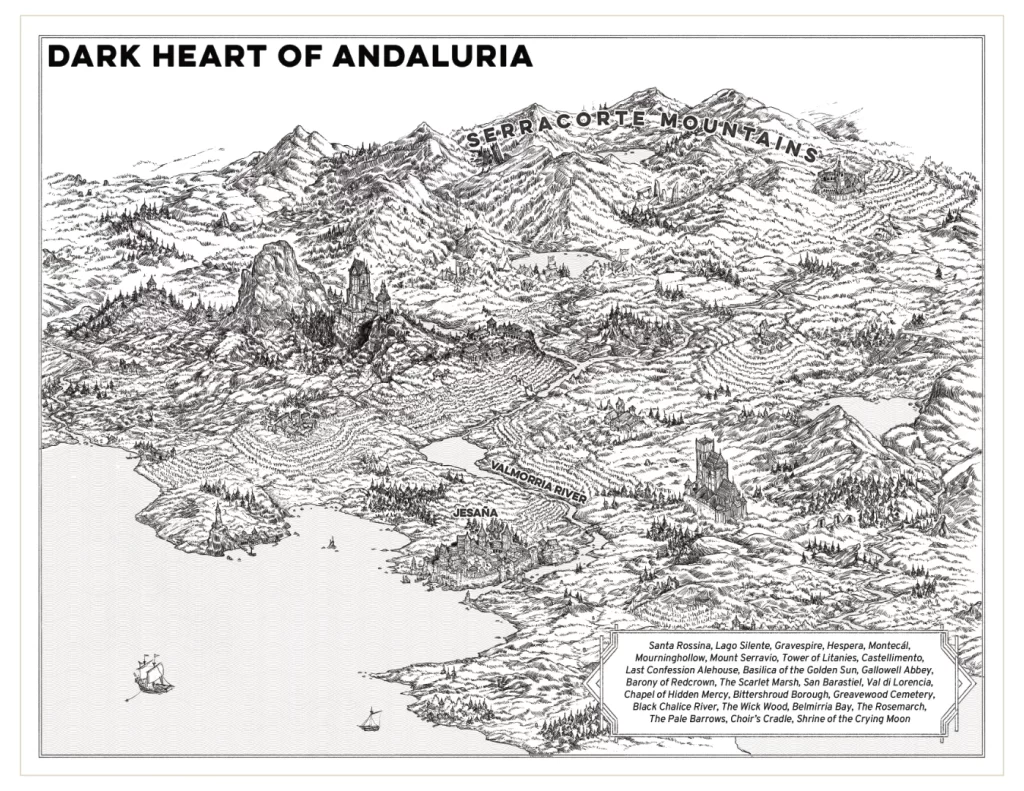
A deadly fog surrounds the land of Barovia and engulfs any creature that tries to leave. Even flying creatures are subject to the fog’s effects. Because of this the sun never fully shines in the lands of Barovia. Even during the day, the sky is dimmed by fog or storm clouds, or the light is strangely muted. Barovian daylight is bright light, yet it isn’t considered sunlight for the purpose of effects and vulnerabilities, such as a vampire’s, tied to sunlight.
Nevertheless, Strahd and his vampire spawn tend to stay indoors most of the day and venture out at night, and they are subject to sunlight created by magic.
Barovians
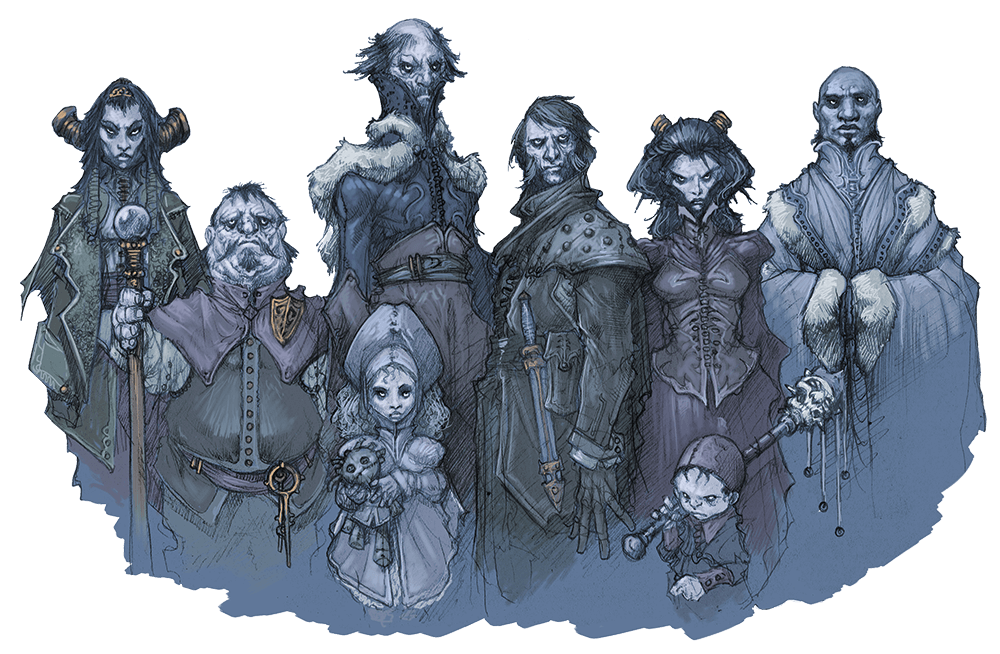
After conquering the valley, Strahd von Zarovich repopulated Barovia with people taken from his other lands. As a result, Barovians come from many different backgrounds, but over time they’ve become a largely human, insular culture shaped by isolation and fear. Most Barovians know other peoples—elves, dwarves, halflings, and the like—exist somewhere out there, but very few have ever actually met them.
Barovians are deeply attached to their homes and traditions and are suspicious of outsiders, especially ones who look or act unfamiliar. They tend to watch strangers in silence rather than greet them, and that quiet scrutiny can feel hostile even when it isn’t meant to be. Nonhuman adventurers draw particular attention, since the only ones most Barovians have ever seen were outsiders Strahd himself lured into the valley. Fear, superstition, and open scorn are common reactions.
Life in Barovia is hard and joyless. Children are raised to fear the wilderness and warned constantly about “the devil Strahd.” Adults scrape by in a closed economy, trading old coins stamped with Strahd’s face, wearing plain clothes, and hiding anything of value to avoid drawing attention. Everyone is expected to contribute which includes growing food, crafting goods, or maintaining what little the valley has left.
Barovians rarely trust outsiders, but when they do, that trust runs deep. Earn it, and you gain loyal allies who remember kindness in a world that has given them very little reason to hope.
Barovian Lore
Once you spend time in Barovia and earn a bit of trust, people start sharing what everyone here knows—or at least what they believe is true. Some of it’s folklore, some of it’s fear, and some of it might be wrong, but it shapes how the people live.
Most Barovians believe Strahd von Zarovich is a vampire who lives in Castle Ravenloft, and that no good ever comes from going near the place. His name is spoken carefully, often with superstition or anger. Many believe Strahd himself is a curse on the land, punishment for some ancient sin committed long before anyone alive can remember.
People will tell you all the usual vampire stories: that Strahd rules the night, commands wolves and vermin, and can change his shape or bend people to his will with a look. They say he can’t enter a home without being invited, that running water and sunlight harm him, and that night is when he’s most dangerous. Whether all of that is true or not, Barovians live as if it is.
As for the land itself, everyone knows you can’t leave. Anyone who tries to walk out of Barovia gets swallowed by the mist. Some turn back in time. Others don’t. Strangers have been pulled into the valley for generations, but none of them ever seem to escape. The forests are full of wolves and worse, and most people stay close to their homes after dark.
Barovians are deeply religious and deeply superstitious. They believe two forces once watched over them: the Morninglord, tied to the sun, and Mother Night, tied to darkness. The sun rarely shines clearly anymore, and prayers often go unanswered, which many take as proof that the gods have abandoned them. Bad luck is taken seriously here. This is especially true when it comes to ravens, which are widely seen as omens. No one in Barovia harms one if they can help it.
None of this is presented as “lore dumps” by the locals. It’s shared in fragments, warnings, offhand comments, and half-whispered advice. This is usually over a drink, behind closed doors, or after making sure no one else is listening.
The Vistani
The Vistani are wanderers who travel in brightly painted, barrel-topped wagons pulled by horses. Compared to the rest of Barovia, they stand out immediately—laughing loudly, dressing in colorful clothes, and living with an openness and joy that feels almost out of place in such a grim land. Where most Barovians feel trapped, the Vistani move freely and treat the road as home.
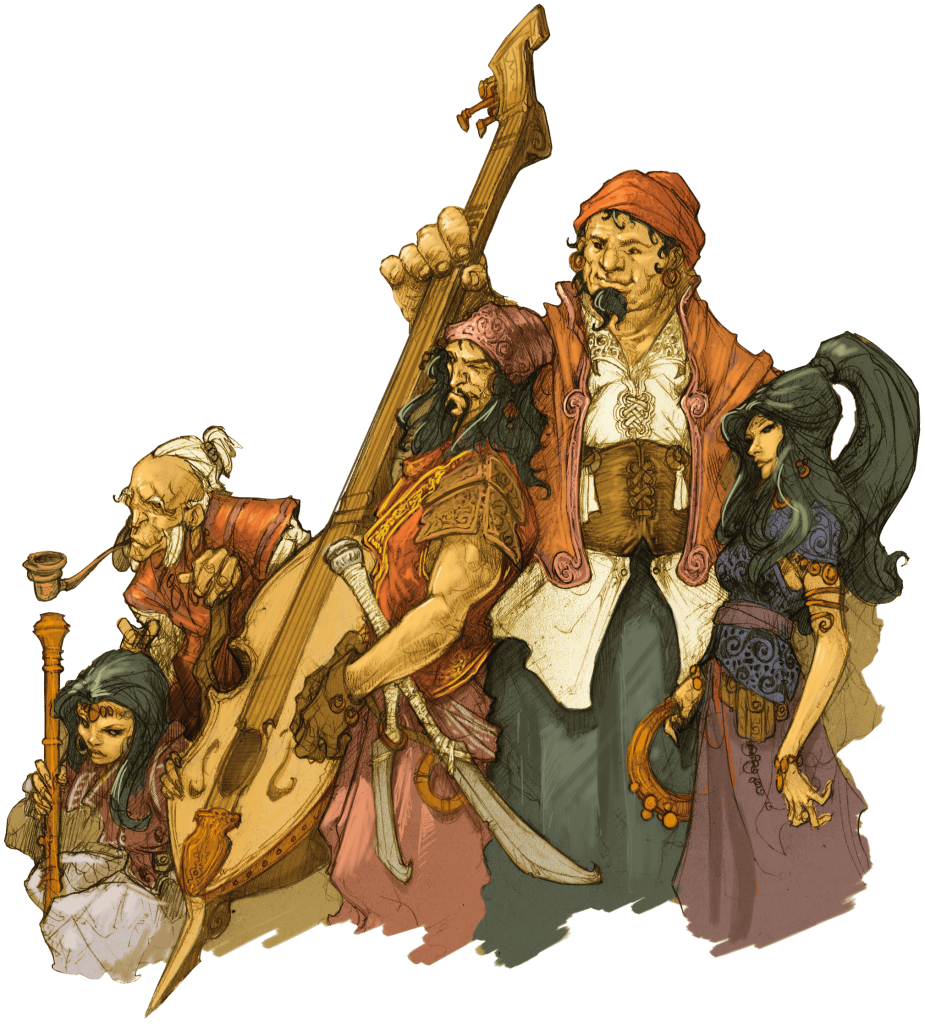
They’re skilled craftspeople and traders—musicians, storytellers, metalworkers, cooks, and fortune-tellers and they value celebration as much as survival. Vistani clans are close-knit and family-focused, guided by elders who make important decisions and often speak in riddles or roundabout wisdom. Disputes tend to end not in violence, but in stories, music, and ritual reconciliation.
Unlike most people in Barovia, the Vistani are comfortable with the mist and the dangers of the land. They know things others don’t, hear rumors from far-off places, and often seem a step ahead of events. That makes them valuable sources of information, but also unpredictable ones. Dealing with the Vistani can be rewarding, frustrating, or unsettling, sometimes all at once.
Barovians view them with a mix of suspicion and envy. Outsiders quickly learn that the Vistani don’t fit neatly into Barovia’s rules, and that their relationship with Strahd von Zarovich is complicated, old, and not easily explained.
Vistani Lore
Once the Vistani warm up to you, they’ll share what they know about Barovia—not as hard facts, but as things learned through stories, travel, and long memory.
They’ll tell you that Strahd von Zarovich has ruled this land for centuries. He’s old nobility, powerful, and deeply tied to Barovia itself. Most people avoid saying his name, calling him the devil instead. His home, Castle Ravenloft, is not a place you visit without a reason—and even then, it’s dangerous.
About Barovia, the Vistani are practical. It’s a closed land with one main road and a few settlements stretched along it. Staying on that road is wise. The woods are not. Some landmarks are avoided entirely, and if a Vistana warns you away from a place, they won’t explain why—only that people who go there don’t come back the same.
They see Barovians as fearful but stubborn people, shaped by the land they live in. Life is hard, hope is scarce, and survival depends on keeping your head down and your traditions intact.
The Vistani also carry strong beliefs. Not all souls leave Barovia when they die. Ravens are bad luck to harm. Curses are real but used carefully, because they can cut both ways.
Finally, they’ll mention that some Vistani can glimpse fate itself. If you ever hear the name Madam Eva, listen closely. The future can be seen here, but never clearly and never without a cost.
Discretion
Tools
This is a horror based game. There are a lot of possible triggers based on what the players backstories and the mysteries that come up.
It is best that we focus on what people’s “hard lines” are rather than list every possible trauma. To do this we will use the Deck of Player Safety which allows us to anonymously state things they do not want to see in this game. This will be done during our session 0.
We will also implement using the X card system that will allow players to cue when a scene is making them uncomfortable with.
After each game we will leave the game open for any discussion. I will also be available for anytime you need to talk about the session.
Content Warnings
This is a list of possible common triggers that may occur in this game. If any of these are hard no for you then maybe this game is not the best game for you.
This is not permission for players to embraces these controversial topics. They are here for the players to find solutions to face them. It is expected that you will take a heroic stance against these controversial topics.
If something is marked as (light) it means that it happens in the background or is inferred.
- Abuse
- Animal Death (light)
- Blood
- Body Horror
- Character Death
- Child Abandonment (light)
- Classism
- Child Death
- Confronting Abuser
- Controlling Parents (light)
- Death
- Drowning
- Drugs (addiction, use, withdrawal)
- Emotional Abuse (light)
- Execution
- Fire
- Forced Blood Draining
- Genocide
- Hangings (light)
- Hostages
- Illness
- Kidnapping
- Lifechanging Injury (light)
- Mass Death (light)
- Microaggressions (light)
- Mind alteration
- Mind Control
- Murder
- Mutilation
- Nightmares about Traumatic Events (light)
- Paralyzation
- Prejudice (light)
- Racism (light)
- Scars (light)
- Small Spaces (Claustrophobia)
- Spiders (light)
- Torture (light)
- Violence
Mechanics
These are mechanics that will be added to the Curse of Strahd to make the world seem more realistic. They are designed to add tension to the dark world of Barovia. These mechanics may change when the new book is released in the summer. A discussion will be had beforehand.
Countdowns
There are many things that can occur in this realm. Because of this the world keeps going on in the background. Expect that there will be long term countdown timers that will occur “behind the GM screen”.
This can make quests that you started end before you could finish them or miss certain things in the world if haste was not taken.
The goal of this is to add tension, not to punish players.
Know these countdowns will occur when taking a LONG REST or when the GM spends a FEAR to advance a countdown.
Resting
Barovia is a dangerous place if ever you take a SHORT or LONG REST the land may take advantage of your vulnerability. If you are not in a safety of village or town then you must roll and compare it to the table.
Short Rest
| 1–2: | Describe how something monstrous found them in the dark. An adversary of the GM’s choice initiates conflict. |
| 3–6: | Describe how something terrifying stalks nearby. The GM gains an additional Fear. |
| 7–11: | Describe how the imposing darkness intensifies. The GM gains an additional Fear. |
| 12: | Describe how the characters stumble upon a hopeful omen. Each PC gains a Hope. |
Long Rest
| 1–2: | Describe how something monstrous found them in the dark. An adversary of the GM’s choice initiates conflict. |
| 3–5: | Describe how something terrifying stalks nearby. The GM gains an additional 2 Fear. |
| 6–9: | Describe how the imposing darkness intensifies. The GM gains an additional Fear. |
| 10–11: | Describe how the characters rest undisturbed. No effect. |
| 12: | Describe how the characters stumble upon a hopeful omen. Each PC gains a Hope. |
Campaign Questions
These questions are here to make you think about your character’s backstory and progression . You do not have answer all these questions but you can use them as a guide. Feel free to add your own questions to help you design your character.
- What is something in Barovia that feels almost human, but isn’t?
- Where do people go when they want something… and don’t want to be seen?
- What does “a better future” even mean here in Barovia?
- What is a characteristic of your character that could be corrupted?
- Who would you risk everything to save?
- Is there a dark secret you are hiding from your party?
- What does Strahd understand about you that nobody else does?